Course overview
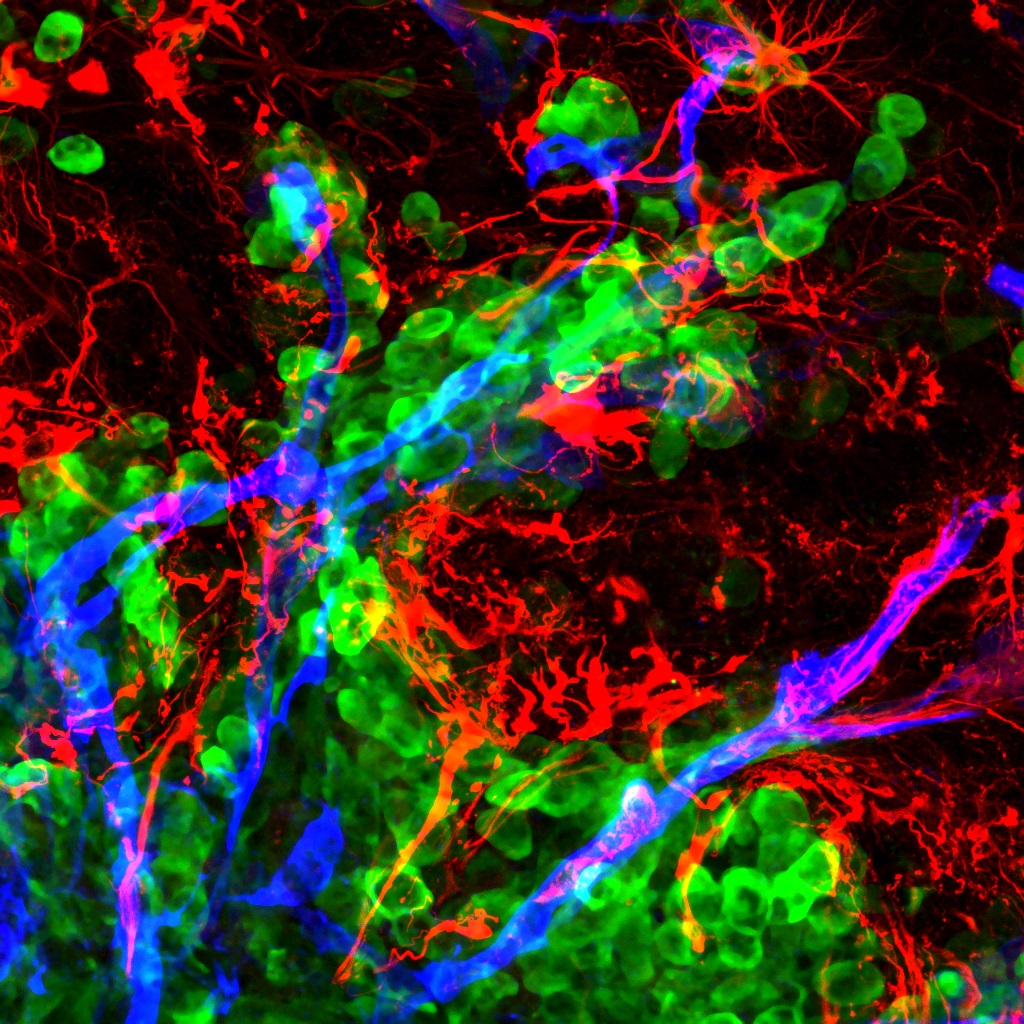
Cancer neuroscience represents an interdisciplinary field at the forefront of cancer research. The intricate interplay between neural, immune, and vascular components of the tumor microenvironment plays important roles in tumor progression and metastasis. Furthermore, tumors may impact neuronal communication by compromising the function of the brain and/or peripheric organs, affecting patient quality of life.
Cutting-edge technologies inspired by the neuroscience field are transforming our ability to study brain cancers from a neural perspective. The 2027 edition of the Cancer Neuroscience course will be an intensive three-week training dedicated to state-of-the-art approaches to study tumors in the nervous system. The course aims to provide an integrated understanding of the crosstalk between neuroscience and cancer biology. Through lectures, discussions, and intensive hands-on projects, participants will receive training in modern molecular, cellular, imaging, and computational methodologies and develop practical skills applicable to their own research.
Course directors

Antonio Pagano Zottola
Bordeaux Institute of Oncology (BRIC), France

Manuel Valiente
Spanish National Cancer Research Centre (CNIO), Spain

Thomas Daubon
National Centre for Scientific Research (CNRS), University of Bordeaux, France
Keynote speakers
Provisional list:
Thomas Kuner, Heidelberg University, Germany
Haikun Liu, German Cancer Research Center, Germany
Jose Lopez Atalaya, Institute of Neuroscience, Spain
Sanne Schagen, Netherlands Cancer Institute, Netherlands
Hugh Robinson, University of Cambridge, United Kingdom
Manuel Valero, Hospital del Mar Research Institute, Spain
Fanny Mann, Marseille Developmental Biology Institute, France
Céline Delloye, Cancer Research Center of Lyon, France
Instructors
To be announced soon
Course content
Topics
The scientific program will be structured around seven main topics:
- Cancer progression in the brain
- Crosstalk of tumor cells with neurons and glia
- Neuronal-cancer cells direct contacts
- Metabolic exchanges between tumors and healthy tissue
- Brain tumors and the immune system
- Therapeutic strategies
- Effects of tumors on cognitive performance

Aims and techniques
To be announced soon
Venue
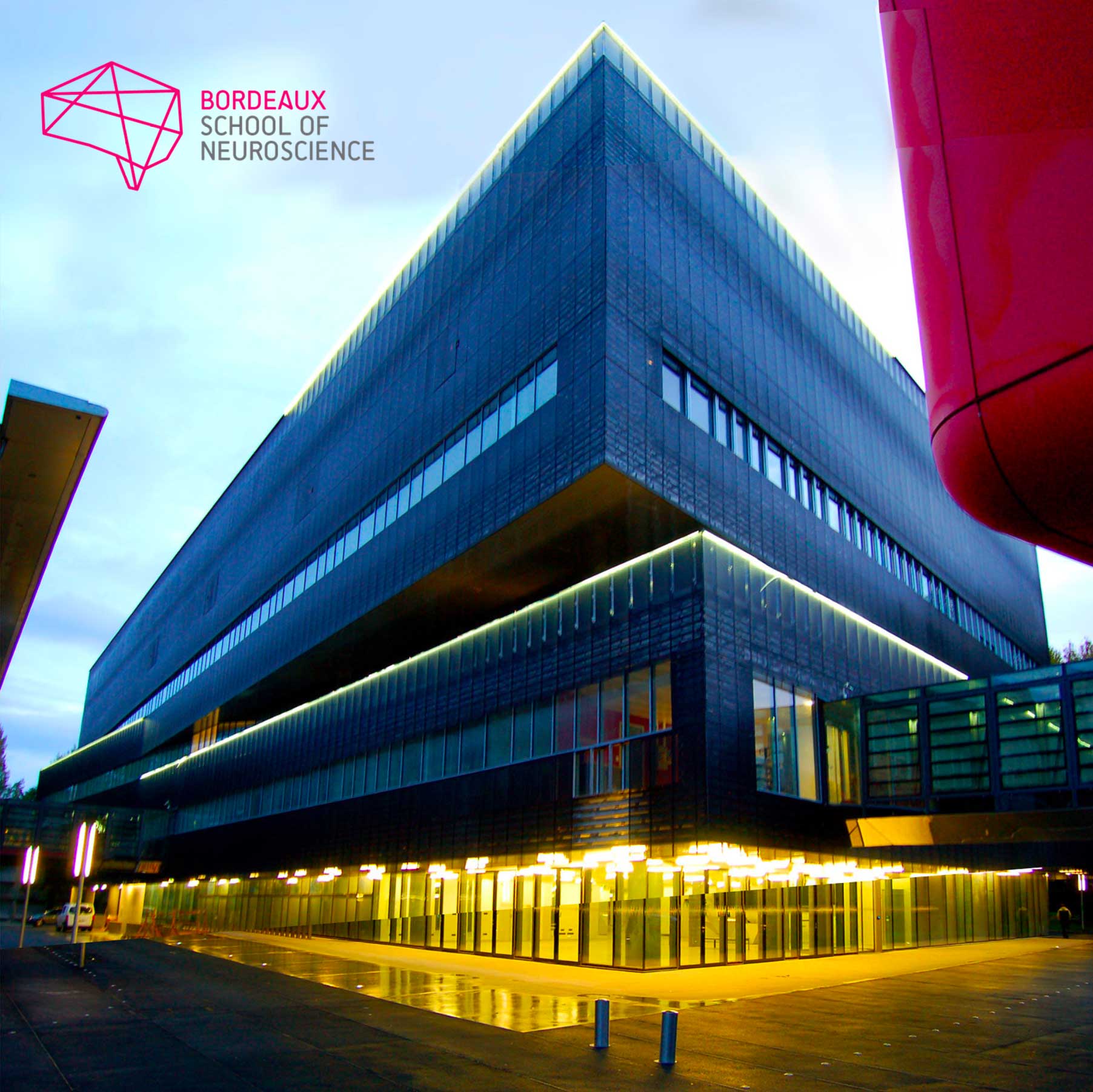
Bordeaux School of Neuroscience, France
The Bordeaux School of Neuroscience is part of Bordeaux Neurocampus, the Neuroscience Department of the University of Bordeaux. Created in 2015, it is currently directed by David Perrais. Throughout the year, renowned scientists, promising young researchers and many students from any geographical horizon come to the School.
The school works on this principle: training in neuroscience research through experimental practice, within the framework of a real research laboratory.
Facilities
Their dedicated laboratory (500m2), available for about 20 trainees, is equipped with a wet lab, an in vitro and in vivo electrophysiology room, IT facilities, a standard cellular imaging room, an animal facility equipped for behavior studies and surgery and catering/meeting spaces. They also have access to high-level core facilities within the University of Bordeaux. They offer their services to international training teams who wish to organize courses in all fields of neuroscience thanks to a dedicated staff for the full logistics (travels, accommodation, on-site catering, social events) and administration and 2 scientific managers in support of the experimentation.
Registration
Fee : 4.500 € (includes tuition fee, accommodation and meals)
Stipends from the Boehringer Ingelheim Foundation and IBRO are available! Please apply through the course application form. In order to identify candidates in real need of a stipend, any grant applicant is encouraged to first request funds from their lab, institution or government.
Applications will open in January 2027.
Questions regarding registration and the course program? Email us at: info@cajal-training.org
Sponsors