Course overview
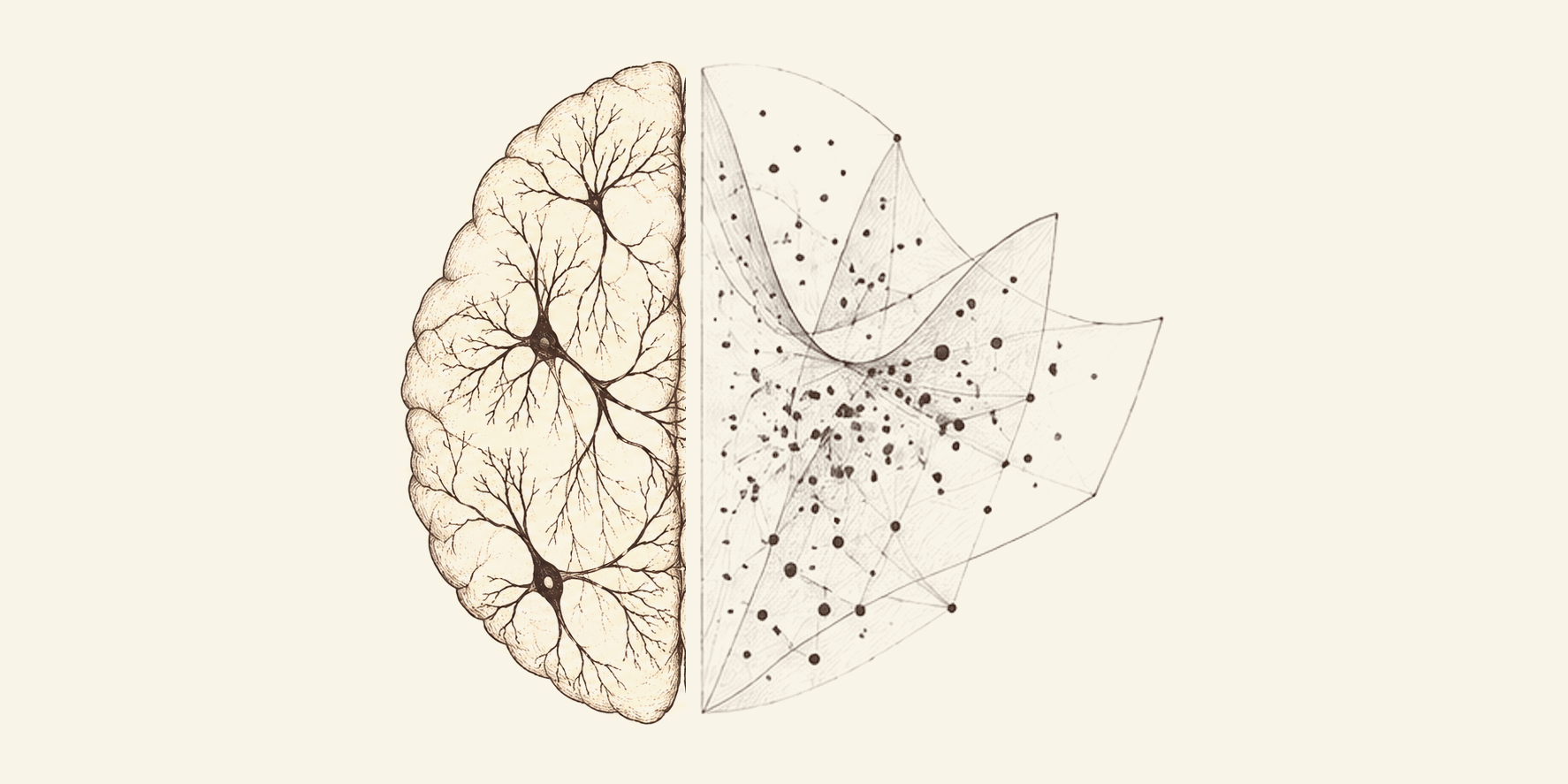
Artificial intelligence is transforming how we study the brain and behavior. Modern AI methods provide both new computational models of neural and cognitive processes and powerful tools for extracting knowledge from complex neural and behavioral data. However, current models and tools remain limited in their ability to capture and uncover many important aspects of biological neural systems, from circuit dynamics to cognitive function.
This three-week course is a hands-on introduction to modern NeuroAI approaches for understanding brain and behavior. You will learn how to:
- model: develop computational models of brain and behavior, from modern AI architectures to biologically constrained neural and circuit models.
- compare: evaluate models against neural and behavioral data, from single neurons to population activity and behavior.
- interpret: use AI to extract insights from high-dimensional neural and behavioral data, from representation learning to parameter inference and model discovery.
- experiment: use models to generate hypotheses, design experiments and interventions, and investigate neural mechanisms in silico.
The three weeks will combine lectures, hands-on tutorials, and student-led research projects mentored by faculty and TAs, alongside advanced lectures by keynote speakers. The course is designed for graduate students and postdocs in neuroscience, cognitive science, machine learning, and related fields who have at least basic programming experience.
Course directors

Leyla Isik
Associate Professor of Cognitive Science, Johns Hopkins University, USA
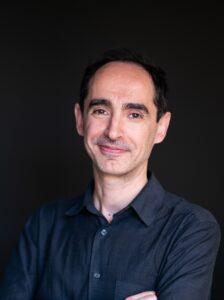
Pedro J. Gonçalves
Group Leader, VIB.AI, and Associate Professor, KU Leuven, Belgium

Martin Schrimpf
Assistant Professor, EPFL, Switzerland
Keynote speakers
Coming soon
Instructors
Coming soon
Course content
Techniques
- Deep learning (CNNs, transformers, foundation models)
- Reinforcement learning
- Probabilistic modeling (Bayesian inference, VAEs, normalizing flows, diffusion models)
- Model-brain comparison (encoding models, RSA, benchmarking)
- Biologically constrained dynamical/circuit models
- Interpretability of AI models
- Model-guided experiments
- In-silico neuroscience

Projects and datasets
Coming soon
Venue
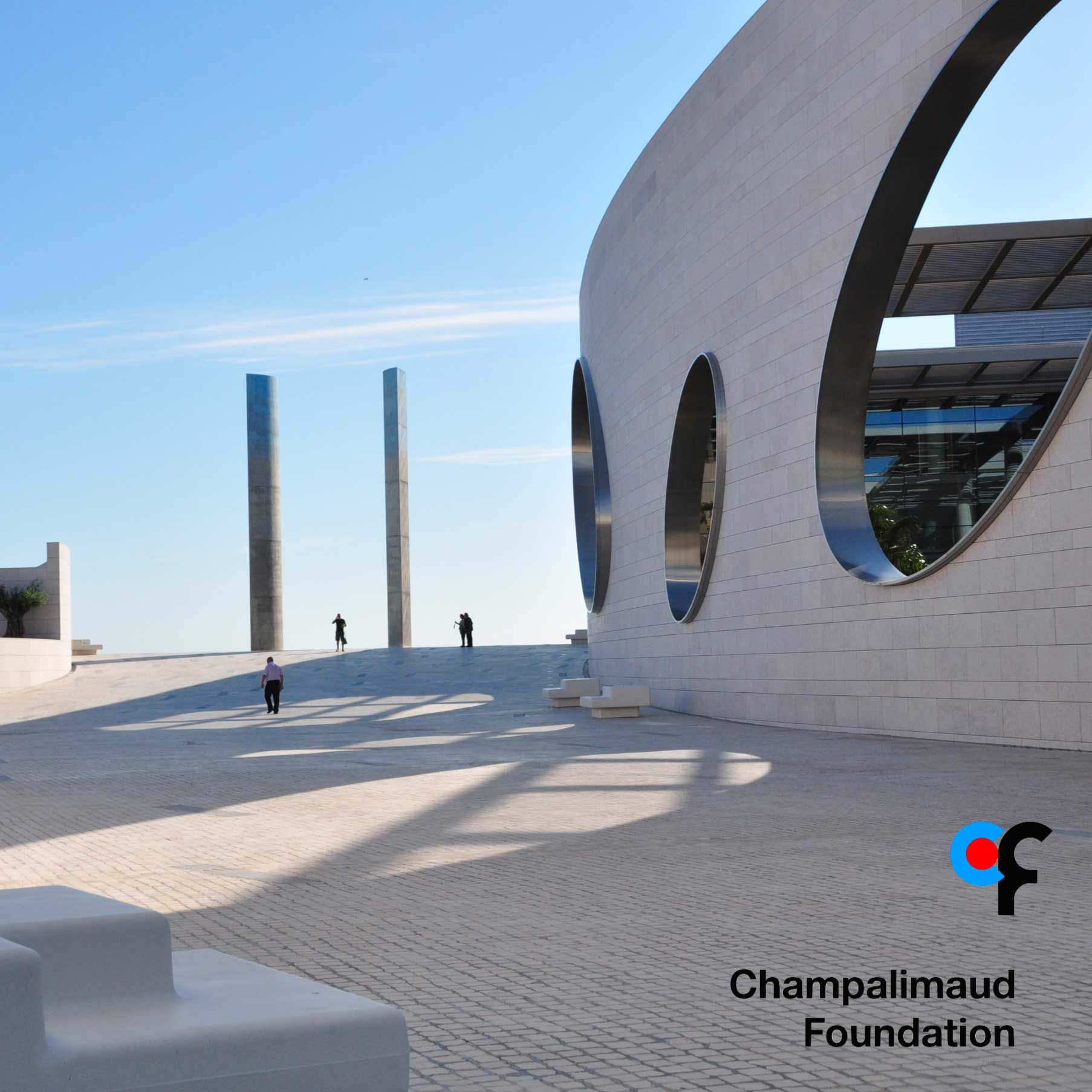
Champalimaud Centre for the Unknown, Portugal
The Champalimaud Foundation is a private, non-profit organization, established in 2005 and dedicated to research excellence in biomedical science. Completed in 2010, the Champalimaud Centre for the Unknown is a state-of-the-art centre that houses the Champalimaud Clinical Centre and the Champalimaud Research, with its three parallel programs – the Champalimaud Neuroscience Programme, the Physiology and Cancer Programme, and the Experimental Clinical Research Programme.
Initially focused on a system and circuit approach to brain function and behavior, the Centre expanded to incorporate molecular and cell biological expertise. The Centre comprises 26 research groups (circa 400 researchers) leading independent curiosity-based research.
Facilities
The Centre provides Facilities dedicated for Training, some in their entirety, for use by the CAJAL Advanced Neuroscience Training Programme. These include the Teaching Laboratory, a fully equipped open lab space for 20-30 students that can be dynamically reconfigured to support a full range of neuroscience courses. It also overlooks, via floor to ceiling windows, a tropical garden and the river. The experimental spaces include: Imaging Lab: A dark-room containing a full size optical table is used for advanced imaging setups (two-photon microscopy, SPIM, etc.) and custom (course-designed) optical systems.
Registration
Fee : 3.500 € (includes tuition fee, accommodation and meals)
Stipends from the Boehringer Ingelheim Foundation are available. Please apply through the course application form. In order to identify candidates in real need of a stipend, any grant applicant is encouraged to first request funds from their lab, institution or government.
Applications will open in 2027.
Questions regarding registration and the course program? Email us at: info@cajal-training.org
Sponsors