Tag Archives: plasticity

The Brain Prize Course: Advanced Techniques for Synapse Biology

Course overview

Synapses are sites of information transfer and storage in the brain. These specialised structures integrate complex signals and undergo functional changes that underlie the formation of memories. Synaptic dysfunction is associated with early stages of neurodegenerative disorders such as Alzheimer’s disease, and underlies neurodevelopmental disorders such as autism spectrum disorders and intellectual disability. 

Studying synapse function and plasticity is key to understanding brain circuits that underlie behaviour, and to identify synaptic malfunction mechanisms underpinning brain diseases. This course will allow students to integrate theoretical and methodological concepts on synapse biology with hands-on experience on state-of-the art imaging, functional and computational methodologies. The course provides an in-depth understanding to many concepts such as synapse formation and maintenance, pre- and postsynaptic mechanisms, structural and functional synaptic plasticity, synaptic integration in neuronal networks and synaptopathies. Hands-on experimental projects conducted in small groups with the support of senior scientists will expose the students to methodologies at the forefront of research in this field.

Partner
brain prize logo

Course Directors

Institut de Biologie de l’ENS, France

University of Bordeaux, France

Honorary lectures from Brain Prize Winners

Erin Schuman

Max Planck Institute for Brain Research - Frankfurt, Germany

Michael Greenberg

Harvard Medical School - Boston, USA

Keynote Speakers

Corette Wierenga, Radboud Universiteit – Nijmegen, Netherlands
Franck Polleux, Columbia University, New York, USA
Monica Di Luca, Università degli Studi di Milano, Italy
Nelson Rebola, Institut du Cerveau, Paris, France
Patrik Verstreken, VIB-KU Leuven Center for Brain & Disease Research, Belgium
Peter Scheiffele, Universität Basel, Switzerland

Instructors

Lynette Lim, VIB-KU Leuven Center for Brain & Disease Research, Belgiuim
Oriane Mauger, Max Planck Institute of Psychiatry – Frankfurt, Germany
Melissa Herman, Charité Berlin, Germany
Etienne Herzog, Interdisciplinary Institute for Neuroscience – Bordeaux, France
Lise Schwab, Interdisciplinary Institute for Neuroscience – Bordeaux, France
Audrey Dufau, Interdisciplinary Institute for Neuroscience – Bordeaux, France
Vasika Venugopal, Interdisciplinary Institute for Neuroscience – Bordeaux, France
Margaux Saint-Martin, Interdisciplinary Institute for Neuroscience – Bordeaux, France
Melissa Cizeron, Mechanisms in Integrated Life Sciences – Lyon, France
Corette Wierenga, Radboud Universiteit – Nijmegen, Netherlands
Ségolène Bompierre, Radboud Universiteit – Nijmegen, Netherlands
Chao Sun, Aarhus University, Denmark
Silvia Turchetto, Aarhus University, Denmark
Cyril Hanus, Institute for Psychiatry and Neurosciences of Paris, France
Matteo Fossati, CNR Institute of Neuroscience – Milano, Italy
Anne-Sophie Hafner, Radboud Universiteit – Nijmegen, Netherlands
Akshay Kapadia, Radboud Universiteit – Nijmegen, Netherlands
Emilie Pacary, Neurocentre Magendie – Bordeaux, France
Estelle Cartier, Neurocentre Magendie – Bordeaux, France
Dominique Fernandes, Interdisciplinary Institute for Neuroscience – Bordeaux, France
Romain Boularand, Interdisciplinary Institute for Neuroscience – Bordeaux, France
Ivo Calaresu, Interdisciplinary Institute for Neuroscience – Bordeaux, France
Camille Mergaux, Interdisciplinary Institute for Neuroscience – Bordeaux, France
Olivier Rossier, Interdisciplinary Institute for Neuroscience – Bordeaux, France,
Amine Mehidi, Interdisciplinary Institute for Neuroscience – Bordeaux, France
Florelle Domart, Interdisciplinary Institute for Neuroscience – Bordeaux, France
Simon Lecomte, Interdisciplinary Institute for Neuroscience – Bordeaux, France
Pauline Belzanne, Interdisciplinary Institute for Neuroscience – Bordeaux, France
Meera Chandra, Interdisciplinary Institute for Neuroscience – Bordeaux, France
Viviana Villicana Munoz, Interdisciplinary Institute for Neuroscience – Bordeaux, France

Course format

Three weeks of intensive training, with students in the lead, supported by senior scientists

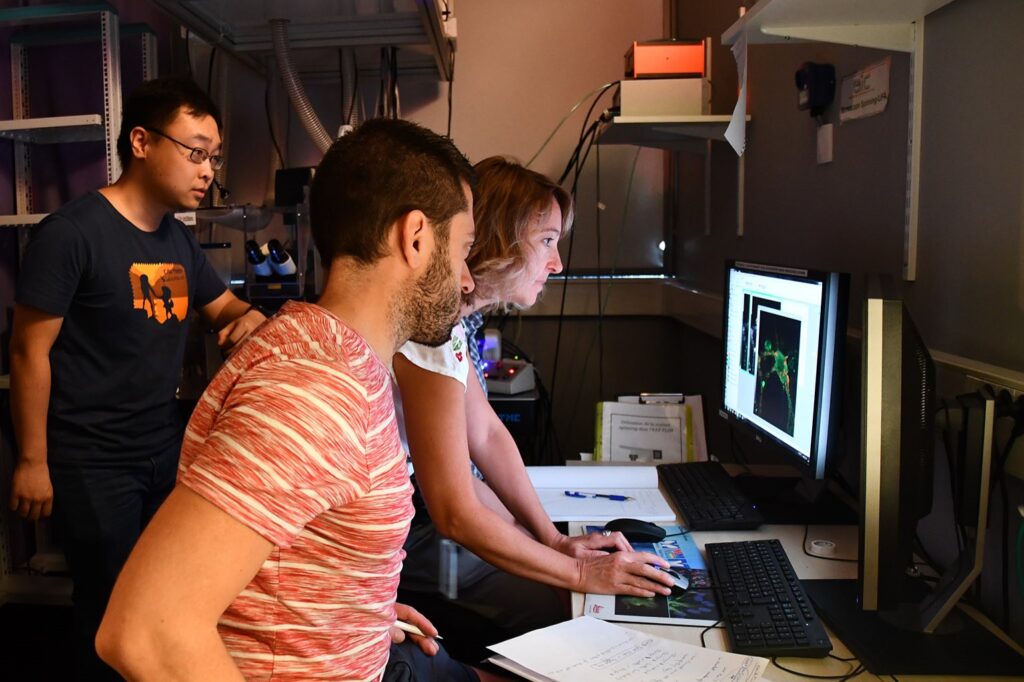
The course includes both lectures by leading scientists in synapse biology, and hands-on training in two projects of about 9 days each, supported by senior scientists. Students (20 maximum) will attend theoretical and methodological lectures during the morning sessions, and spend the afternoon period in the Neuroscience Training Lab at the Neurocampus performing projects in groups of 2-3 students. The training laboratory is dedicated to the course and it is equipped with a wet lab for cellular and molecular biology, cell culture and animal rooms, electrophysiology rigs and behavior set-ups. Students will have access to core facilities at the University of Bordeaux, including to the Bordeaux Imaging Center, the Functional Genomics and the Biochemistry facilities. Support and expertise to carry out the projects is provided by external instructors coming from leading international laboratories in synapse biology, who will be present throughout the duration of the projects and assist students in their experiments (one instructor per group). Students are encouraged to participate in the design of projects, ahead of the course, through interaction with their project instructor. Students are welcome to bring their constructs or models, to be integrated in the project to be conducted. At the end of each project, students will present their findings and discuss with colleagues and instructors. Extracurricular activities (such as panel discussions on ethics, diversity and equity in Neuroscience), outreach activities and social events are also planned.

Course Topics

1. Activity-dependent regulation of gene expression and synapses

2. Local protein synthesis and degradation

3. Trafficking of synaptic proteins

4. Synaptogenesis and synaptic plasticity

5. Extracellular synaptic organizers, synaptic adhesion and circuit specification

6. Synaptic integration in neuronal networks

7. Presynaptic and postsynaptic mechanisms

8. Excitation and inhibition

9. Synaptic dysfunction in diseases

10. Structure-function of synaptic proteins

11. Neuromodulation

12. Human-specific regulations of synapses
microscopy students
DSCF1736 copy

Techniques

  • Super-resolution microscopy (PALM, STORM, DNA PAINT, STED)
  • Synapse-type specific proteomics (FASS)
  • Single-molecule RNA FISH, real-time qPCR
  • Stereotaxic surgery, in utero and single cell electroporation
  • Two photon and confocal microscopy, live imaging
  • FRET measurements for activity sensors
  • In vivo FRAP
  • Whole cell patch clamp recordings
  • Expansion microscopy
  • Electron microscopy
  • Computational analysis
  • Optogenetics
  • Gene editing
  • Behavior

Experimental Projects

  1. Developmental trajectories of long-range GABAergic neurons
  2. Exploration of RNA mechanisms underlying memory formation 
  3. Investigating mechanisms of low-frequency synaptic depression in cultured hippocampal synapses
  4. How shearing forces impact multipartite synapses during synaptosome preparation and sorting 
  5. Visualizing Astrocyte-Neuron and Astrocyte-Synapse Interactions in 3D Using Expansion Microscopy
  6. Imaging extracellular synapse organizers using live and super-resolution microscopy in the nematode Caenorhabditis elegans  
  7. Lighting up neuromodulation: visualizing PKA signaling in hippocampal neurons using a FRET-based imaging approach
  8. Visualizing Activity-dependent Signaling for Synaptic Protein Clearance 
  9. Atomistic modeling of glycosylated synaptic protein structure 
  10. Assessing excitatory and inhibitory synapse development upon in vivo manipulation of gene function in distinct neuronal populations
  11. Impact of local APP amyloidogenic proteolysis on presynaptic function
  12. Analysis of excitatory and inhibitoy synapses in vivo using in utero electropration and stereotaxic injections
  13. Exploring the impact of extracellular matrix complexity in the diffusion of circulating molecules and cell surface proteins
  14. Revealing the role and localization of talin in glutamatergic synapses
  15. Revealing the co-organization of synaptic proteins using SMLM microscopy techniques
  16. Optically controlling synaptic transmission at hippocampal mossy fiber synapses with a bistable inhibitory optoGPCR 

Bordeaux School of Neuroscience, France

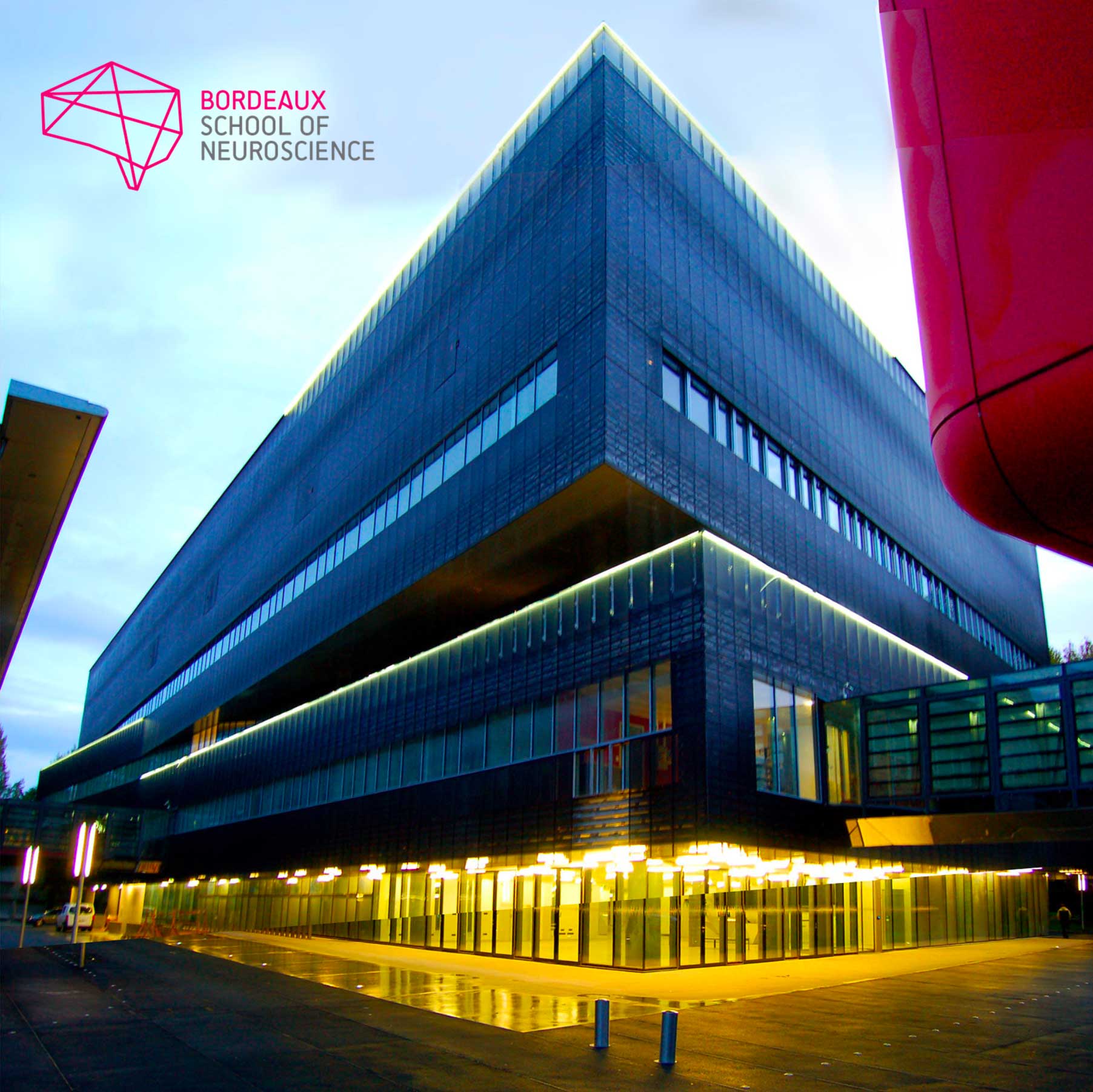
The Bordeaux School of Neuroscience is part of Bordeaux Neurocampus, the Neuroscience Department of the University of Bordeaux. Christophe Mulle, its current director, founded it in 2015. Throughout the year, renowned scientists, promising young researchers and many students from any geographical horizon come to the School.
The school works on this principle: training in neuroscience research through experimental practice, within the framework of a real research laboratory.

Facilities
Their dedicated laboratory (500m2), available for about 20 trainees, is equipped with a wet lab, an in vitro and in vivo electrophysiology room, IT facilities, a standard cellular imaging room, an animal facility equipped for behavior studies and surgery and catering/meeting spaces. They also have access to high-level core facilities within the University of Bordeaux. They offer their services to international training teams who wish to organize courses in all fields of neuroscience thanks to a dedicated staff for the full logistics (travels, accommodation, on-site catering, social events) and administration and 2 scientific managers in support of the experimentation.
Registration

Fee : 4 500 € (includes tuition fee, accommodation and meals)

Applications closed

The CAJAL programme offers 4 stipends per course (waived registration fee, not including travel expenses). Please apply through the course online application form. In order to identify candidates in real need of a stipend, any grant applicant is encouraged to first request funds from their lab, institution or government.

Kindly note that if you benefited from a Cajal stipend in the past, you are no longer eligible to receive this kind of funding. However other types of funding (such as partial travel grants from sponsors) might be made available after the participants selection pro- cess, depending on the course.

Cancer Neuroscience

Course overview

Cancer neuroscience represents an interdisciplinary field at the forefront of cancer research, seamlessly combining insights from neurobiology and oncology. The intricate interplay between the nervous system and cancer has yielded profound insights into the mechanisms of tumor progression and the tumor microenvironment. The latter, comprising neuro-glial, immune, and endothelial networks, has been identified as a critical determinant of cancer growth and metastasis.

Cutting-edge technologies inspired by the neuroscience field are transforming our ability to study brain cancers from a neural perspective. This course will enable students to integrate theoretical and methodological concepts in neuro-oncology, combining modern neuroscience approaches with hands-on experience in state-of-the-art methodologies. The course provides an integrated understanding of the crosstalk between neuro-oncology and neuroscience.

Course Directors

Luxembourg Institute of Health, Luxembourg

Bordeaux Institute of Oncology – INSERM, France

German Cancer Research Center, Germany

Honorary Lecture - Brain Prize Winner

German Cancer Research Center, Germany

Keynote Speakers

Thomas Daubon, Institut de Biochimie et Génétique Cellulaires, France

Manuel Valiente, Centro Nacional de Investigaciones Oncológicas, Spain

Simona Parrinello, UCL Cancer Institute, UK

Aurélie Tchoghandjian, Institut de Neurophysiopathologie, France

Helene Castel, Laboratoire de Différenciation et Communication Neuronale et Neuroendocrine, France

Hrvoye Miletic, University of Bergen, Norway

Vidhya Madapusi Ravi, Freiburg Institute for Advanced Studies , Germany

Leila Akkari, Netherlands Cancer Institute, Netherlands

Dieter Henrik Heiland, Department of Neurosurgery, Germany

Elena Ciaglia, Università di Salerno, Italy

Instructors

Ahmad Charanek – Bordeaux Institute of Oncology, France
Audrey Burban – Institut de Biochimie et Génétique Cellulaires, France
Aurélie Tchoghandjia – Institut de Neurophysiopathologie, France
Bastien Redon – Neurocentre Magendie, France
Beatrice Senigagliesi – Interdisciplinary Institute for NeuroScience: Bordeaux, France
Benjamin Chauvineau – NutriNeuro, France
Camille Humeau – Bordeaux Institute of Oncology, France
Chiara Bastiancich – Institut de Neurophysiopathologie, France
Claire Larrieu – Institut de Biochimie et Génétique Cellulaires, France
Clement Morgat – Institut de Neurosciences Cognitives et Intégratives d’Aquitaine, France
Clementine Bosch Bouju – NutriNeuro, France
Cloe Tessier – Bordeaux Institute of Oncology
Doriane Bomont – Institut de Biochimie et Génétique Cellulaires, France
Ekin Reyhan – Universität Heidelberg, Germany
Emanuelle Georget – Bordeaux Institute of Oncology
Kevin Boye – Paris Cardiovascular Research Center, France
Kirill Smirnov – Institut de Psychiatrie et Neurosciences de Paris, France
Lucie Brisson – Bordeaux Institute of Oncology, France
Mahsa Rezaeipour – Luxembourg Institute of Health, Luxembourg
Maialen Arrieta – Institut de Biochimie et Génétique Cellulaires, France
Maria Haykal – Institut de Biochimie et Génétique Cellulaires, France
Mathis Pinglaut – Institut de Biochimie et Génétique Cellulaires, France
Nassim Haffiane – Interdisciplinary Institute for NeuroScience: Bordeaux, France
Oceane Martin – Institut de Biochimie et Génétique Cellulaires, France
Pilar Moreno-Sanchez – Luxembourg Institute of Health, Luxembourg
Stella Soyka – Universität Heidelberg, Germany
Thomas Daubon – Institut de Biochimie et Génétique Cellulaires, France
Valentina Lopardo – Università di Salerno, Italy

Course Content and Techniques

Cultures of brain tumor cells

Primary cultures of neurons, astrocytes, and oligodendrocytes

Primary culture of enteric nervous system cells (ENS) and ex vivo analysis of ENS structure in mouse models

Tumor cell spheroid cultures

Organoids

Organotypic brain slices

Co-culture of tumor cells with brain cells

Culture of glioblastoma cells in 3D-living systems of brain

Stereotaxic surgery for tumor implantation

Tumor debulking via the biopsy punch technique

Live imaging of cell-cell interactions

Confocal microscopy

Spinning-disk microscopy

Super-resolution microscopy

Two-photon microscopy

Multiphoton longitudinal imaging of tumor progression

DREADD manipulation and calcium imaging in mice during reward-based navigation.

Neuronal calcium activity using a head-mounted miniature microscope on animals performing behavioral tasks

Magnetic Resonance Imaging

Radiolabeling with radiometals and characterization of radio pharmaceuticals

SPECT/CT imaging and post-mortem biodistribution

PBMC isolation from human blood

Isolation of murine tumor-infiltrating immune cells

Characterization of immune cells by flow cytometry

High resolution respirometry using Resipher system and Oroboros Oxygraph-2k

Isolation of proteins and exosomes.

PamGene Technology

Methods to induce Blood-brain barrier opening in brain tumor models

Electrophysiology in multielectrode array

Electrophysiological patch-clamp recordings

Introduction to signal preprocessing, spike detection, and activity mapping

Image analysis using Imaris software

Analysis of cell motility with ImageJ

Analysis of spatial transcriptomics datasets using Seurat, Squidpy, R and Python

Analysis of 10x Genomics Visium datasets from human glioblastoma samples

Exploration of 10x Genomics Xenium imaging-based spatial data

Bordeaux School of Neuroscience, France

The Bordeaux School of Neuroscience is part of Bordeaux Neurocampus, the Neuroscience Department of the University of Bordeaux. Christophe Mulle, its current director, founded it in 2015. Throughout the year, renowned scientists, promising young researchers and many students from any geographical horizon come to the School.
The school works on this principle: training in neuroscience research through experimental practice, within the framework of a real research laboratory.

Facilities
Their dedicated laboratory (500m2), available for about 20 trainees, is equipped with a wet lab, an in vitro and in vivo electrophysiology room, IT facilities, a standard cellular imaging room, an animal facility equipped for behavior studies and surgery and catering/meeting spaces. They also have access to high-level core facilities within the University of Bordeaux. They offer their services to international training teams who wish to organize courses in all fields of neuroscience thanks to a dedicated staff for the full logistics (travels, accommodation, on-site catering, social events) and administration and 2 scientific managers in support of the experimentation.

Registration

Fee : 4 500 € (includes tuition fee, accommodation and meals)

Applications are closed.

The CAJAL programme offers 4 stipends per course (waived registration fee, not including travel expenses). Please apply through the course online application form. In order to identify candidates in real need of a stipend, any grant applicant is encouraged to first request funds from their lab, institution or government.

Kindly note that if you benefited from a Cajal stipend in the past, you are no longer eligible to receive this kind of funding. However other types of funding (such as partial travel grants from sponsors) might be made available after the participants selection pro- cess, depending on the course.
Neuroimmunology in Physiology and Disease: From Fundamental Concepts to Hands-on Training

Course Overview

The Cajal Course on Neuroimmunology will provide a comprehensive overview of the interactions between the nervous and immune systems, with a focus on microglia, macrophages, and adaptive immunity. The program will cover both physiological and pathological aspects, exploring the roles of microglia in brain homeostasis, their response to injury, and their involvement in neurodegenerative diseases. Sessions on macrophages will address their functions in the central and peripheral nervous systems, highlighting their contributions to neuroinflammation and tissue repair. The adaptive immune system’s influence on neurological conditions will also be discussed, including T and B cell responses in autoimmunity and neurodegeneration. The course will finally cover a session on body-brain interaction and the glymphatic system, in health and disease.

Combining lectures from leading experts in the field with advanced hands-on training, this course will cover a variety of approaches, including immune cell profiling by flow cytometry and histology, metabolic investigations, imaging techniques, in different in vitro and in vivo models, such as primary immune cells, iPSC-derived microglia and preclinical mouse models.

Course Directors

University of Lausanne, Switzerland

University of Bordeaux, France

University of Cambridge, UK

Keynote Speakers

Aleksandra Deczkowska, Institut Pasteur, Paris, France
Sonia Garel, Institut de Biologie de l’École Normale Supérieure Paris, France
Andrew Greenhalgh, University of Manchester, Manchester, UK
Laurent Groc, University of Bordeaux, CNRS, Bordeaux, France
Michael Heneka, Luxemburg University, Luxemburg
Jonathan Kipnis, Washington University School of Medicine, USA
Arthur Liesz, Ludwig-Maximilians Munich University, Germany
Marco Prinz, Freiburg University, Germany
Rejane Rua, Centre d’Immunologie de Marseille Luminy, France
Michal Schwartz, Weizmann Institute of Science, Israel

Instructors

Elena Avignone, Neurocampus Bordeaux, France
Pavle Boskovic, Washington University School of Medicine, USA
Amy Dashwood, Cambridge University, UK
Mohamad El Amki, University of Zurich, Switzerland
Max Fliegauf, University of Freiburg, Germany
Mariangeles Kovacs-Arevalo, Pasteur Institut, France
Saudina Mateus Gomes, Aix-Marseille Université, France
Charlotte Madore, University of Bordeaux, France
Renzo Mancuso, VIP Antwerp, Belgium
Katia Monsorno, University of Lausanne, Switzerland
Katerina Palios, Cambridge University, UK
Luca Peruzzotti-Jametti, Cambridge University, UK
Audrey Romano, Aix-Marseille Université, France
Alanna Spiteri, VIB Antwerp, Belgium
Daan Verhaege, Washington University School of Medicine, USA

Course Topics

Several different techniques and models will be used, including flow cytometry, fluorescence- and magnetic-activated cell sorting (FACS and MACS), confocal microscopy, high resolution respirometry, live imaging, electrophysiology, human iPSC-derived microglia, in vivo mouse models, murine primary cultures.

Course topics will include:

  • Microglia in the healthy and diseased brain
  • CNS-associated macrophages in physiology and pathology
  • Adaptive immunity and CNS interactions
  • The glymphatic system and brain immunity
  • Neuroimmune interactions in body-brain communication
microscopy students

Bordeaux School of Neuroscience, France

The Bordeaux School of Neuroscience is part of Bordeaux Neurocampus, the Neuroscience Department of the University of Bordeaux. Christophe Mulle, its current director, founded it in 2015. Throughout the year, renowned scientists, promising young researchers and many students from any geographical horizon come to the School.
The school works on this principle: training in neuroscience research through experimental practice, within the framework of a real research laboratory.

Facilities
Their dedicated laboratory (500m2), available for about 20 trainees, is equipped with a wet lab, an in vitro and in vivo electrophysiology room, IT facilities, a standard cellular imaging room, an animal facility equipped for behavior studies and surgery and catering/meeting spaces. They also have access to high-level core facilities within the University of Bordeaux. They offer their services to international training teams who wish to organize courses in all fields of neuroscience thanks to a dedicated staff for the full logistics (travels, accommodation, on-site catering, social events) and administration and 2 scientific managers in support of the experimentation.

Registration

Fee : 4.000 € (includes tuition fee, accommodation and meals)

Applications closed

The CAJAL programme offers 4 stipends per course (waived registration fee, not including travel expenses). Please apply through the course online application form. In order to identify candidates in real need of a stipend, any grant applicant is encouraged to first request funds from their lab, institution or government.

Kindly note that if you benefited from a Cajal stipend in the past, you are no longer eligible to receive this kind of funding. However other types of funding (such as partial travel grants from sponsors) might be made available after the participants selection pro- cess, depending on the course.

Advanced techniques for synapse biology

Course overview

Synapses are sites of information transfer and storage in the brain. These specialised structures integrate complex signals and undergo functional changes that underlie the formation of memories. Synaptic dysfunction is associated with early stages of neurodegenerative disorders such as Alzheimer’s disease, and underlies neurodevelopmental disorders such as autism spectrum disorders and intellectual disability.

Studying synapse function and plasticity is key to understanding brain circuits that underlie behaviour, and to identify synaptic malfunction mechanisms underpinning brain diseases. This course will allow students to integrate theoretical and methodological concepts on synapse biology with hands-on experience on state-of-the art imaging, functional and computational methodologies. The course provides an in-depth understanding to many concepts such as synapse formation and maintenance, pre- and postsynaptic mechanisms, structural and functional synaptic plasticity, synaptic integration in neuronal networks and synaptopathies. Hands-on experimental projects conducted in small groups with the support of senior scientists will expose the students to methodologies at the forefront of research in this field.

Course directors

Ana Luisa Carvalho

Course Director

CNC-Center for Neuroscience and Cell Biology, University of Coimbra, Portugal

Mathieu Letellier

Course Director

IINS, University of Bordeaux, France

Hey-Kyoung Lee

Course Director

The Zanvyl Krieger Mind/Brain Institute, The Johns Hopkins University, USA

Keynote Speakers

Alfredo Kirkwood – Johns Hopkins University, USA
Brian D McCabe – EPFL, Lausanne, Switzerland
Cécile Charrier – Institute of Biology, École Normale Supérieure, France
Christian Lohmann – Netherlands Institute for Neuroscience, Netherlands
Daniel Choquet – IINS, University of Bordeaux, France
Joseph Kittler – University College London, UK
Juan Burrone – King’s College London, UK
Julie Perroy – IGF, University of Montpellier, France
Julijana Gjorgjieva – Max Planck Institute for Brain Research, Germany
Marina Mikhaylova – Humboldt Universität zu Berlin, Germany
Nael Nadif Kasri – Radboudumc Donders Institute for Brain, Cognition and Behaviour, Holland
Noa Lipstein – FMP-Berlin, Germany
Rosa Paolicelli – University of Lausanne, Switzerland

Instructors

Alexy Louis – IINS, Univ of Bordeaux, France

Anne-Claire Compagnion – Univ. Lausanne, Switzerland

Elena Baz-Badillo – IINS, Univ Bordeaux, France

Frederic Gambino – IINS, Univ Bordeaux, France

Joana Ferreira – CNC, Univ Coimbra, Portugal

Julia Bär – Humboldt Universität zu Berlin, Germany

Julien Dupuis – IINS, Univ Bordeaux, France

Kevin Crosby – University of Colorado Denver, Department of Pharmacology, USA

Léa Sarzynski – IINS, Univ Bordeaux, France

Lucille Alonso – IINS, Univ Bordeaux, France

Luís Ribeiro – CNC, Univ Coimbra, Portugal

Margaux Giraudet – IINS, Univ Bordeaux, France

Marie-Lise Jobin – IINS, Univ Bordeaux, France

Marina Hommersom – Radboudumc Donders Institute for Brain, Cognition and Behaviour, Holland

Michelle BridiWest Virginia University, USA

Mónica Santos – CNC, Univ Coimbra, Portugal

Olivier Nicole – IINS, Univ Bordeaux, France

Tamara Buijs – Netherlands Institute for Neuroscience, Netherlands

Vivek Belapurkar – IINS, Univ Bordeaux, France

Course content

Exposure to central topics in synapse biology, and hands-on experience with exciting projects with innovative techniques

The research in synapse biology holds a central place in Neuroscience, as it connects findings in molecular and cellular Neuroscience to the understanding of circuits and behaviour. In addition, synaptopathy is a major pathogenic mechanism in both neuropsychiatric and neurodegenerative disorders. The last decades have brought enormous advances in the methodologies used to study synapses, and which endow researchers with the possibility to bridge from the molecular analyses of synapses to cellular, circuits and behaviour approaches to tackle central questions about how the brain works.

This course provides the opportunity to learn from experts in the field about questions at the forefront of synapse biology, and to obtain hands-on experience with innovative techniques to study synapses. These include gene transfer, live imaging of proteins and signalling molecules (including in vivo 2 photon microscopy), superresolution microscopy for cellular imaging of proteins at excitatory and inhibitory synapses, electrophysiology, animal behaviour and computational methods.

Topics

  1. Synaptic traficking
  2. Synaptogenesis, synapse adhesion and synapse maintenance
  3. Presynaptic mechanisms
  4. Inhibitory synapses
  5. Structural and functional synaptic plasticity
  6. Synaptic integration in neuronal networks
  7. Calcium dynamics and signaling
  8. Microglia in the shaping of neural circuits
  9. Synaptic dysfunction in disease
  10. Synaptic computation
microscopy students

Course format

Three weeks of intensive training, with students in the lead, supported by senior scientists

The course includes both lectures by leading scientists in synapse biology, and hands-on training in two projects of about 9 days each, supported by senior scientists. Students (20 maximum) will attend theoretical and methodological lectures during the morning sessions, and spend the afternoon period in the Neuroscience Training Lab at the Neurocampus performing projects in groups of 2-3 students. The training laboratory is dedicated to the course and it is equipped with a wet lab for cellular and molecular biology, cell culture and animal rooms, electrophysiology rigs and behavior set-ups. Students will have access to core facilities at the University of Bordeaux, including to the Bordeaux Imaging Center, the Functional Genomics and the Biochemistry facilities. Support and expertise to carry out the projects is provided by external instructors coming from leading international laboratories in synapse biology, who will be present throughout the duration of the projects and assist students in their experiments (one instructor per group). Students are encouraged to participate in the design of projects, ahead of the course, through interaction with their project instructor. Students are welcome to bring their constructs or models, to be integrated in the project to be conducted. At the end of each project, students will present their findings and discuss with colleagues and instructors. Extracurricular activities (such as panel discussions on ethics, diversity and equity in Neuroscience), outreach activities and social events are also planned.

Techniques

  • Whole cell patch clamp recordings in brain slices
  • Patch-seq / RNAseq
  • Co-culture synaptogenic assay
  • Synaptic interactome analysis through proximity-dependent labeling
  • Stereotaxic surgery with cannulae implantation
  • Behavior analysis
  • Confocal time-lapse imaging and FRAP measurements
  • FLIM-FRET measurements for activity sensors
  • Single-molecule tracking and PALM studies
  • Direct stochastic optical reconstruction microscopy (dSTORM)
  • hiPSC culturing and neuronal differentiation
  • MEA recording: Axion Maestro Pro
  • Two photon imaging

Experimental projects:

  • Nanoscale organization of the synapse
  • Superresolution microscopy in the analysis of transsynaptic interactions
  • Interactome of synaptic cell-adhesion molecules
  • Architectural and signalling dynamics at the inhibitory synapse
  • Regulation of inhibitory synaptic transmission by wake-active neuromodulators
  • Measuring spontaneous network activity of human iPSC-derived neurons using micro-electrode arrays
  • Microglia-mediated synapse engulfment
  • Membrane trafficking/endo/exocytosis
  • In vivo imaging of boutons related to behavior
  • Pharmacological modulation of fear extinction
  • Mitochondrial dynamics and dendritic calcium imaging
  • Multimodal profiling of synaptic connectivity through patch-seq
 

Bordeaux School of Neuroscience, France

The Bordeaux School of Neuroscience is part of Bordeaux Neurocampus, the Neuroscience Department of the University of Bordeaux. Christophe Mulle, its current director, founded it in 2015. Throughout the year, renowned scientists, promising young researchers and many students from any geographical horizon come to the School.
The school works on this principle: training in neuroscience research through experimental practice, within the framework of a real research laboratory.

Facilities
Their dedicated laboratory (500m2), available for about 20 trainees, is equipped with a wet lab, an in vitro and in vivo electrophysiology room, IT facilities, a standard cellular imaging room, an animal facility equipped for behavior studies and surgery and catering/meeting spaces. They also have access to high-level core facilities within the University of Bordeaux. They offer their services to international training teams who wish to organize courses in all fields of neuroscience thanks to a dedicated staff for the full logistics (travels, accommodation, on-site catering, social events) and administration and 2 scientific managers in support of the experimentation.

Registration

Fee : 3.950 € (includes tuition fee, accommodation and meals)

Applications closed 29 May 2023

The CAJAL programme offers 4 stipends per course (waived registration fee, not including travel expenses). Please apply through the course online application form. In order to identify candidates in real need of a stipend, any grant applicant is encouraged to first request funds from their lab, institution or government.

Kindly note that if you benefited from a Cajal stipend in the past, you are no longer eligible to receive this kind of funding. However other types of funding (such as partial travel grants from sponsors) might be made available after the participants selection pro- cess, depending on the course.